

 0
0


CENTER FOR THE STUDY OF EXPRESSION
Discover our art therapy programs: a practical training in art therapy (1 year) and a certification program for art therapists (2 years).
Registration for the 2027 programs is now open. An information session will be held on August 27, 2026 at 5:00 p.m. via videoconference.
Sign up by email : cee-formation@mahhsa.fr
THE ORIGINS OF THE CENTER
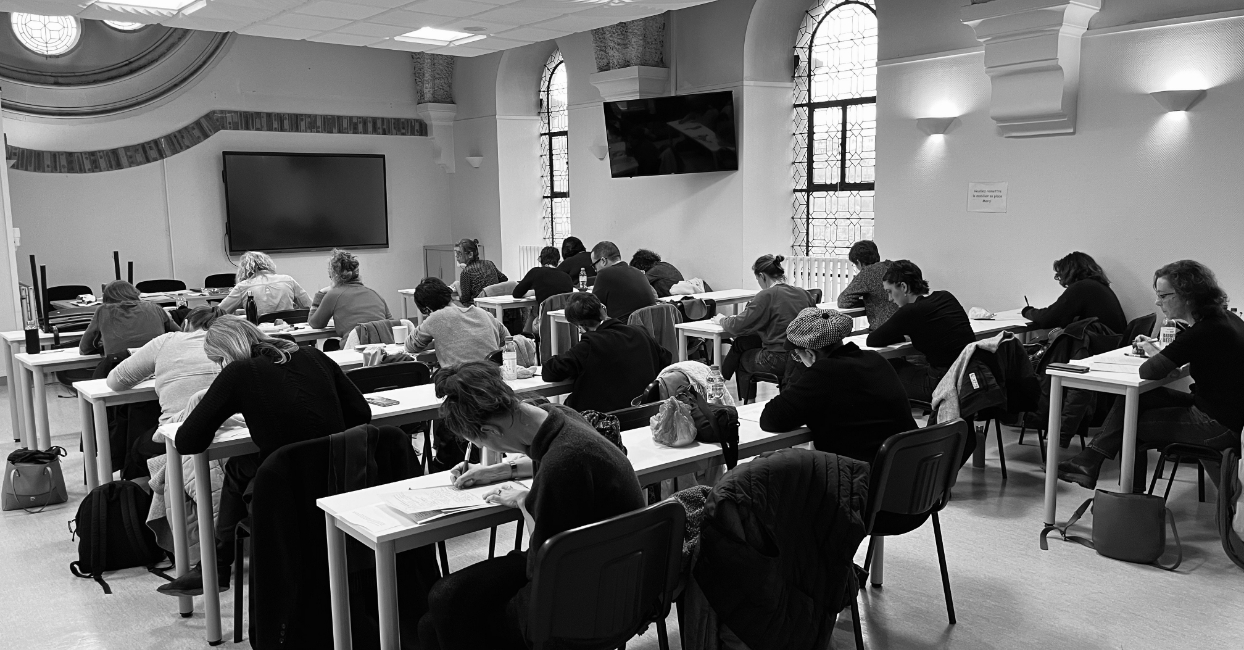
The Center for the Study of Expression (CEE) was founded in 1954, when Professor Jean Delay established the first Department of Psychopathological Art at the Clinic for Mental and Brain Disorders, entrusted to Professor Robert Volmat. In 1973, this department evolved to become the Center for the Study of Expression as it exists today. The CEE is a non-profit organization. Its mission is to provide training in art therapy, conduct scientific research, compile specialized documentation, and preserve and promote the Sainte-Anne Collection. It is also a member of the International Council of Museums (ICOM).
1-YEAR TRAINING PROGRAM
PRACTICAL TRAINING
IN ART THERAPY (FPAT)
EDUCATIONAL OBJECTIVES
Discover what can be called art therapy, both in theory and in practice. Encourage exchanges between different practices. Refresh your theoretical knowledge if you are already running workshops.
Practical experimentation is encouraged.
TARGET AUDIENCE
Psychologists, educators, artists, doctors, paramedical professionals. Those from the healthcare sector and those from the arts sector are eligible, regardless of their field.
PREREQUISITES
This training program is intended for individuals with at least a high school diploma and professional experience, regardless of the field. Personal or professional artistic practice is desirable.
2-YEAR TRAINING PROGRAM
QUALIFYING TRAINING
IN ART THERAPY (FAT)
EDUCATIONAL OBJECTIVES
Be able to lead an art therapy workshop, whether in an institutional or private setting. Acquire the theoretical concepts underlying these practices. Prepare for the therapeutic relationship through practical scenarios, practice analyses, and feedback from internships.
Be able to write documents such as internship reports and research papers.
TARGET AUDIENCE
Psychologists, educators, artists, doctors, social workers. Both those from the health sector and those from the arts sector are eligible. Previous professional experience is required, as well as artistic experience.
PREREQUISITES
This program is intended for individuals with at least a bachelor’s degree and professional experience, regardless of field. This program leads to a qualification. Personal or professional artistic practice is required.
REGISTRATION PROCEDURES
1
SEND A FILE
Pour candidater, adresser votre CV ainsi qu’une lettre de motivation :
By email : cee.formation@mahhsa.fr
By mail : Anne-Marie Dubois, Centre d’Etude de l’Expression, 1 rue Cabanis, 75014 Paris.
2
IF YOUR APPLICATION
IS ACCEPTED
You will be offered an interview with Anne-Marie Dubois, doctor and scientific director of training programs.
3
IF YOU OBTAIN AN AGREEMENT
TO REGISTER
You will be given a registration form.
No application for funding
can be made before this.
SUPPORT THE CENTER
Thanks to your support, the CEE and MAHHSA continue to promote links between art and psychiatry through training, exhibitions, and research. Become a “Friend of the Museum” to support these initiatives. Your membership gives you access to exclusive events: study days, conferences, museum events, as well as free access to documentation and discounts on publications. Your donations are eligible for a 66% tax reduction under Article 200 of the French General Tax Code. You will receive a tax receipt for any contribution, to be included with your tax return.