CURRENT EXHIBITION
« L’invention d’une écriture. Le Plancher de Jeannot et les oeuvres de […] »
FROM SEPTEMBER 10, 2025 TO JANUARY 18, 2026
ABOUT THE EXHIBITION
After being presented from a historical and archaeological perspective, Jeannot’s Floor is the subject of a new interpretation at the Museum of Art and History of Sainte-Anne Hospital (MAHHSA). Starting September 10, 2025, the exhibition “The Invention of a Writing System. Jeannot’s Floor and the works of […]” will seek to transcend the traditional categories of art and writing in order to explore what connects works of art beyond labels and disciplines.
This second exhibition is based on an essential principle: to consider Jeannot’s Floor no longer as a raw testimony or an isolated artifact, but as a work in its own right, in dialogue with contemporary creation. Through a selection of artists (Picasso, Tàpies, Finlay, among others), it offers an analogical approach, where formal and technical similarities allow us to explore new connections between signs, matter, and gesture. Rather than opposing writing and image, spontaneity and construction, the exhibition advocates a decompartmentalized approach. By revealing the correspondences between the Plancher and other artistic practices, it questions the very nature of visual and textual language, thus offering a broader reflection on the act of creation. The exhibition is divided into four chapters.
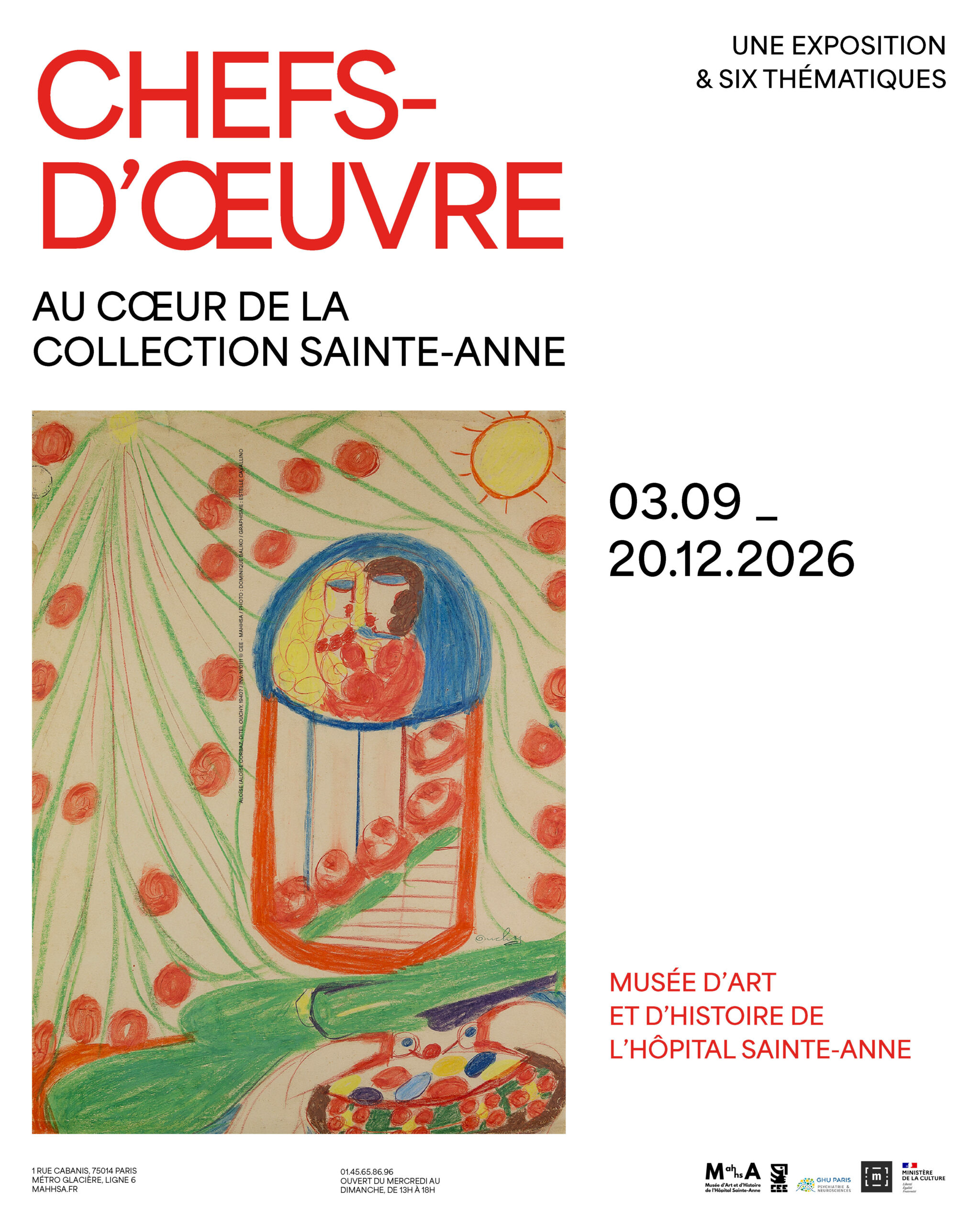
Exhibition poster © CEE-MAHHSA / Mathilde Dubois
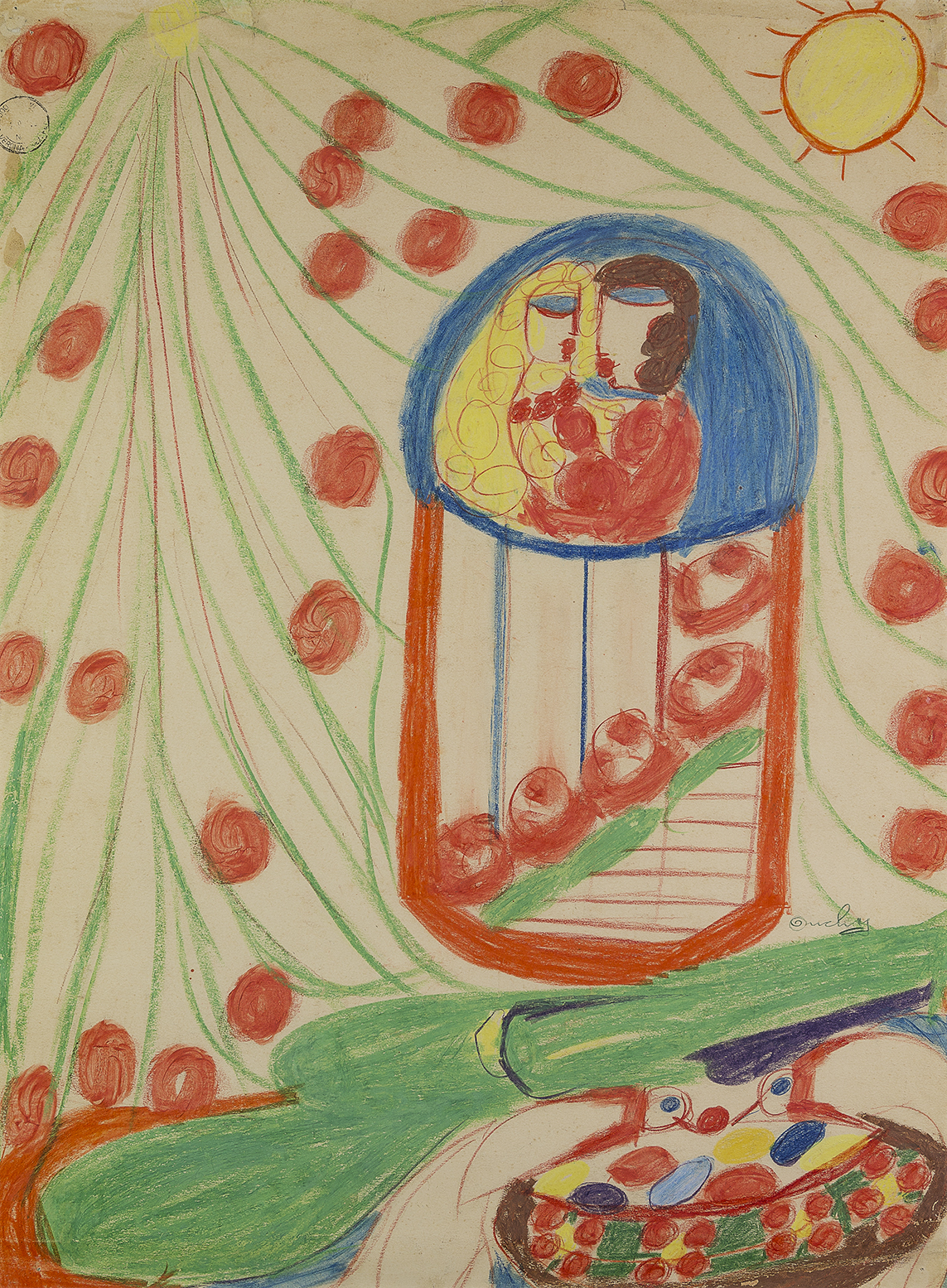
Le Plancher de Jeannot © CEE-MAHHSA / Dominique Baliko
CHAPTER 1: Glyphs, grids, letters, words, and writing
This chapter brings together works in which writing, reduced to signs, is expressed without images, emphasizing the plasticity of the text. It is therefore writing that is freed from any legibility. Jeannot’s Plancher and the works presented here are at the crossroads of two approaches: on the one hand, writing without codification, which does not claim to be directly comprehensible; on the other hand, radical writing, asserted as the sole visual object constituting the work.
Artists : Roland Barthes, Christian Dotremont, Ian Hamilton Finlay, Sol LeWitt, Agnes Martin, Henri Michaux, Gabriel Orozco, Pablo Picasso, Antoni Tàpies. ___________________________
CHAPTER 2 : “La lettre volée”
Secretly engraved in 1972, Le Plancher de Jeannot remained unknown until its discovery in 1994, when it was exhibited, making it visible to all. Borrowed from Edgar Allan Poe’s short story, “La lettre volée” refers to a letter that everyone believes to be hidden, when in fact it has been deliberately left in plain sight. Each work in this chapter embodies this purloined letter: what is written remains inaccessible to the reader, due to the desire of their creators to transform them.
Artists : Pierre Buraglio, Erik Dietman, Gérard Duchêne, François Dufrène, Paul-Armand Gette, Jean-Luc Parant, Tom Phillips, Wolf Vostell.
___________________________
CHAPTER 3 : Implementation of the substrate
The implementation of the substrate refers to the material and surface on which the work takes shape. The text of Le Plancher de Jeannot was engraved by its author into the floor of his bedroom. Subjected to words, the oak floor was not simply a medium that became a work of art. The works brought together here bear witness to this transformation of the medium, where the material aspect becomes essential to the constitution of the work.
Artists : Ghada Amer, Antonin Artaud, Bernard Aubertin, Cathryn Boch, Brassaï, Günter Brus, Pierre Buraglio, Dominique De Beir, Daniel Dezeuze, Lucio Fontana, Pierre Mercier, Arnulf Rainer, François Rouan, Niki de Saint Phalle, Günther Uecker.
___________________________
CHAPTER 4 : The House
Jean Crampilh-Broucaret engraved the floor shortly after the death of his mother, who was buried under the stairs of the family home. This gesture transformed the house into a unique place with a new identity: a tomb-house. The works presented here do not reside in writing, but in the immaterial and symbolic process linked to the house: the memory of places, of nest-houses, of mother-houses, even of destroyed houses.
Artists : Thierry De Cordier, Mario Del Curto, Etienne-Martin, Jochen Gerz, Richard Greaves, Gordon Matta-Clark, Lawrence Weiner.
PROGRAMMATION

VISITS: EXHIBITION
Discover the current exhibition with a guided tour. After exploring the Plancher de Jeannot from an archaeological perspective, a second exhibition examines its place in art history. This perspective is provided by a dialogue with a number of modern and contemporary artists.
CENTRE D’ÉTUDE
DE L’EXPRESSION
FORMATION QUALIFIANTE D’ART-THÉRAPIE (2 ANS) Cette formation d’art-thérapeute vous permet d’acquérir les compétences nécessaires pour animer des ateliers de thérapie par médiation artistique, en alliant théorie, pratique et réflexion clinique, tout en vous préparant à intervenir aussi bien en institution qu’en pratique privée.

VISITS: HERITAGEE
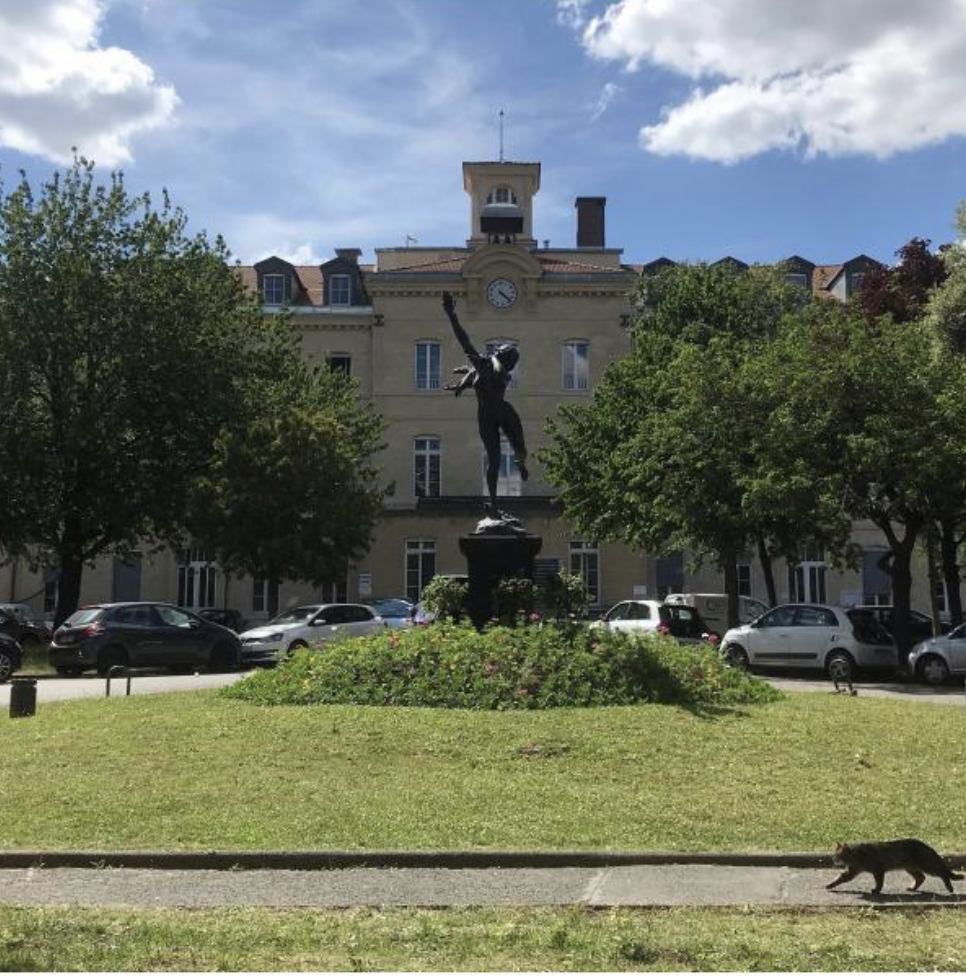
You will discover the outdoor areas of Sainte-Anne Hospital,
whose origins date back to the 17th century. The second part of the tour, at the Sainte-Anne Hospital Museum of Art and History (MAHHSA), presents the exhibition
“The Invention of a Writing System: Jeannot’s Floor and the Works of […]”.
CENTRE D’ÉTUDE
DE L’EXPRESSION
FORMATION QUALIFIANTE D’ART-THÉRAPIE (2 ANS) Cette formation d’art-thérapeute vous permet d’acquérir les compétences nécessaires pour animer des ateliers de thérapie par médiation artistique, en alliant théorie, pratique et réflexion clinique, tout en vous préparant à intervenir aussi bien en institution qu’en pratique privée.

VISITS: THEMATIC
During the Occupation, 45,000 psychiatric patients died of hunger, cold, or lack of care: a “gentle extermination.” At Sainte-Anne, history was written differently.
This tour offers a deep dive into the hospital’s history during the war,
giving a close-up look at the daily lives of patients
and the medical staff’s commitment.
CENTRE D’ÉTUDE
DE L’EXPRESSION
FORMATION QUALIFIANTE D’ART-THÉRAPIE (2 ANS) Cette formation d’art-thérapeute vous permet d’acquérir les compétences nécessaires pour animer des ateliers de thérapie par médiation artistique, en alliant théorie, pratique et réflexion clinique, tout en vous préparant à intervenir aussi bien en institution qu’en pratique privée.